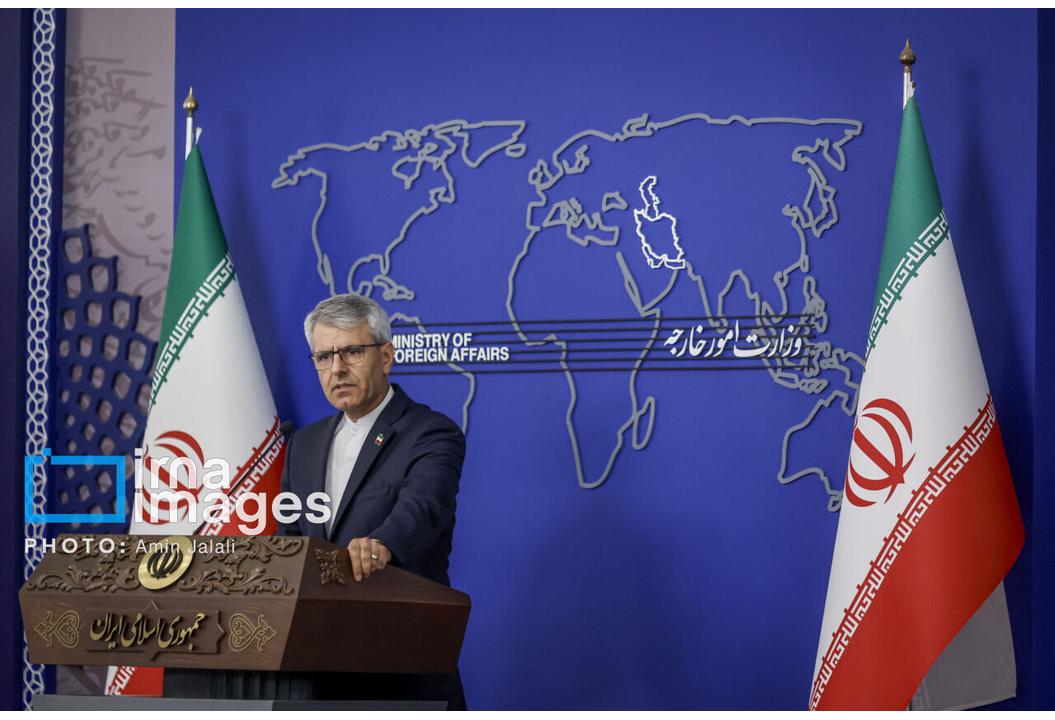
Baqaei made the remarks at his weekly press conference in Tehran on Tuesday, two days after the OIC foreign ministers concluded their two-day meeting in Iraq.
Responding to an IRNA question about a resolution adopted at the Baghdad meeting in solidarity with Saudi Arabia amid its ongoing conflict with Yemen, the spokesperson said the resolution should be distinguished from the Baghdad Declaration.
“The resolution must be distinguished from the Baghdad Declaration. The most important outcome of the OIC Council of Foreign Ministers’ meeting in Baghdad was the final communiqué, which is usually adopted by consensus. About one or two hours before the communiqué was adopted, it was proposed that the text should not include any issues that could cause divisions among Islamic countries. Specifically, this referred to Yemen,” he said.
“Labeling part of the Islamic community at an Islamic gathering runs counter to the philosophy behind the establishment of the Organization of Islamic Cooperation (OIC) and its ideals of Islamic unity and solidarity. We repeatedly emphasized this point and ultimately succeeded in preventing the inclusion of two specific paragraphs on Yemen, whose wording we believed was in no way in the interests of the Muslim Ummah,” Baqaei added.
He reiterated Iran’s stance that the conflict between Yemen and Saudi Arabia should be resolved through dialogue.
- No uranium enrichment talks during Lavrov’s visit
The spokesperson rejected reports that Russian Foreign Minister Sergey Lavrov’s talks with Iranian officials in Tehran on Monday covered Iran–US negotiations and uranium enrichment, stressing that the Russian diplomat’s visit had been planned well in advance.
“We have absolutely not backed down from our principled positions, as they are in line with Iran’s national interests. Lavrov’s visit is part of the ongoing consultations between the two countries and had been on the agenda for quite some time,” Baqaei said.
He added that Monday’s talks covered issues serving the national interests of both Iran and Russia, including regional developments related to Ukraine and the Persian Gulf, as well as Iran’s nuclear issue.
Russia has consistently expressed its readiness to help reduce tensions, and Iran appreciates this “positive and constructive” approach, he noted.
- Trade suspended on Iran–Pakistan border due to technical issues
Regarding the suspension of trade at the Iran–Pakistan border in recent days, Baqaei said it was due to technical issues that needed to be addressed.
“Our Pakistani friends informed us from the outset of certain technical issues and updates that needed to be carried out, and they are working to resolve them,” he said, adding that Iran would follow up on the matter.
The spokesperson dismissed speculation about Islamabad’s motives for suspending trade with Iran, noting that Iranian exports were continuing. He also highlighted the longstanding friendly ties between the two countries and efforts by their senior officials in recent years to expand political and economic relations.
- Ending aggression against Iran is key to resolving Europe’s fuel crisis
Responding to a question about the French president’s remarks linking protests and domestic unrest in France to the war against Iran and the situation in the Strait of Hormuz, the spokesperson said that if domestic problems in France and other European countries stem from rising fuel prices, and those price hikes are linked to the crisis in the Persian Gulf region and the Strait of Hormuz, they have a responsibility to take action to address the problem at its root.
He stressed that the root cause of the problem is the US and Israeli regime’s military aggression against Iran and the continued naval blockade of the country.
The Foreign Ministry spokesperson also addressed other issues raised by reporters at his press conference, outlining Iran’s positions as follows:
- Regional security: Countries in West Asia and the Persian Gulf region should work together to establish a reliable security mechanism based on mutual trust, free from foreign pressure and attempts by the US and other parties to exert influence, which disregard the security interests of regional countries.
- Azerbaijan’s hijab ban: The people of Azerbaijan themselves should decide how to convey their concerns to their authorities over the latest hijab ban in the country. Iran hopes the issue will be resolved through mutual understanding, taking into account shared values and respect for people’s fundamental rights.
- Iran–US negotiations: Washington’s response to Iran’s seven-point proposal was inadequate and incomplete. Iran remains committed to diplomacy to safeguard its national interests, reiterating demands for lifting the naval blockade and ending the war on all fronts as legitimate and reasonable.
- US unilateralism: US aggressive unilateralism threatens international peace and security. “No Kings” rallies held in the US show that Americans oppose spending their resources and lives on an aggressive war that only serves the Israeli regime’s interests. Washington’s actions against the UN, international courts, and other institutions require a coordinated response through multilateral frameworks.
- Minab massacre: Neither the Pentagon’s investigation into the massacre nor its decision to postpone its internal report changes anything. Whether an act constitutes a crime is not determined by the perpetrator. The Minab massacre was not the only crime committed by the US; all attacks carried out during the recent 40-day military campaign were crimes.
Other issues raised at the press conference included Iran’s relations with Russia and China; Iran’s determination to pursue its rights through diplomacy while confronting any renewed military action; Iran’s regional policy of rejecting hegemony; security along its eastern borders; and Tehran’s support for an Iraqi proposal to hold a meeting involving Iran, Iraq, and the Persian Gulf littoral states.
4194**9417