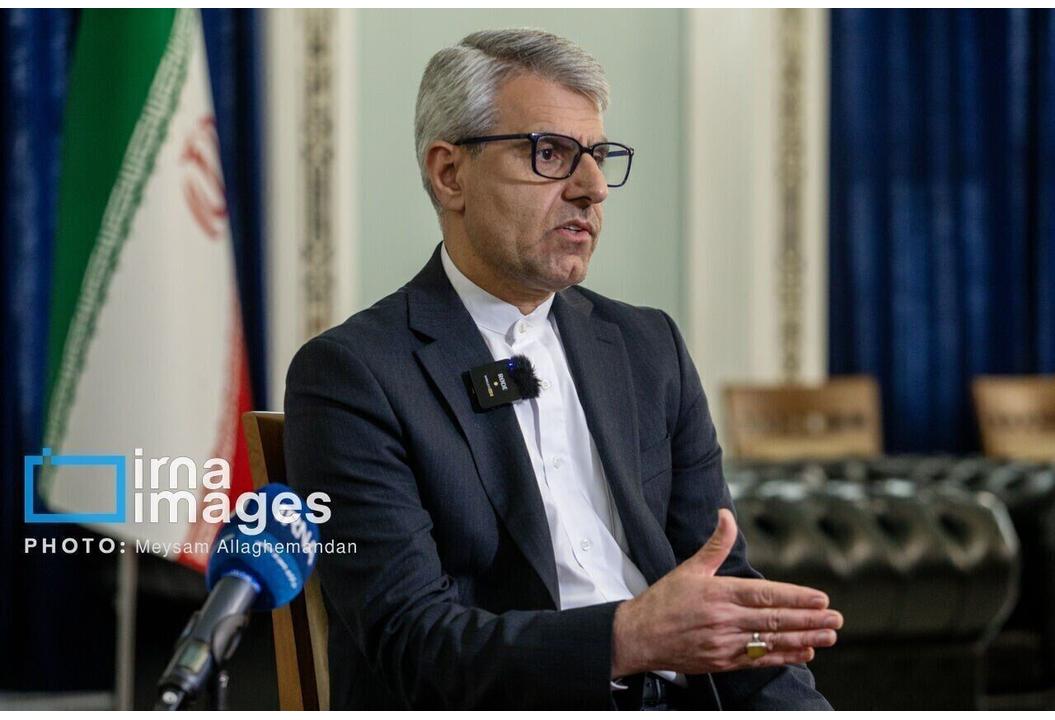
Speaking at an event titled “Confronting the United States: Yesterday, Today and Tomorrow” in Tehran on Tuesday, Baqaei said understanding the deep-rooted causes of the confrontation between Iran and the United States did not mean abandoning political engagement or diplomatic solutions.
He argued that the dispute went beyond material competition, geopolitical rivalries or energy-related interests, although these factors also played a role. Rather, he said, it stemmed from two fundamentally different and incompatible views of humanity, society and the philosophy of politics.
Baqaei said the United States had turned Iran’s nuclear program into “the biggest lie of the century” over the past 10 to 12 years, using allegations of a threat posed by Iran as justification for pressure and economic restrictions against the Iranian people.
He said no evidence had ever been found indicating even the slightest diversion of Iran’s nuclear program towards non-peaceful purposes, yet Washington had continued to promote the allegations.
The spokesperson said the repetition of this fabricated narrative had become an inseparable part of US foreign policy and was increasingly shaped by the wishes of the Israeli regime.
He added that US either lacked genuine commitment to diplomacy or regarded it merely as a means of imposing demands, blackmailing others and dictating terms.
“This is an approach they even apply towards their close partners, but the Iranian nation will never succumb to it,” Baqaei said.
The spokesperson said the Iranian nation’s resistance over the past eight months was a continuation of a much longer struggle spanning five to eight decades. He traced the origins of the confrontation to the United States’ role in the 1953 coup against Iran’s democratically elected government, adding that Washington had since pursued various measures to weaken the country.
Drawing parallels between historical and contemporary Western pressure campaigns, Baqaei said the sanctions and restrictions imposed on Iran today followed a pattern established by Britain in the 1950s, before the nationalization of Iran's oil industry.
At that time, he said, Britain had referred Iran’s case to the United Nations Security Council and attempted to portray the nationalization of the country’s oil industry as a threat to international peace and security.
He said the same scenario had subsequently been repeated over Iran’s peaceful nuclear program, with Western powers seeking to use international mechanisms to exert pressure on Tehran.
He argued that the ultimate objective of such campaigns has been to prevent Iran from expanding its national capabilities and attaining its rightful position in the international system, in line with its historical and civilizational standing.
He nevertheless stressed that recognizing the roots of the confrontation should not be interpreted as rejecting diplomacy.
Diplomacy, he said, remained a necessary and effective instrument that must operate alongside defensive capabilities to protect Iran’s national interests.
Describing diplomatic and defensive efforts as inseparable, Baqaei said diplomacy complemented the country’s capabilities on the battlefield and served as another means of defending national interests.
He concluded that Iran’s adversaries had failed to contain the country and would remain unsuccessful in the future, given Iran’s accumulated experience, capabilities and strength.
9341**2050