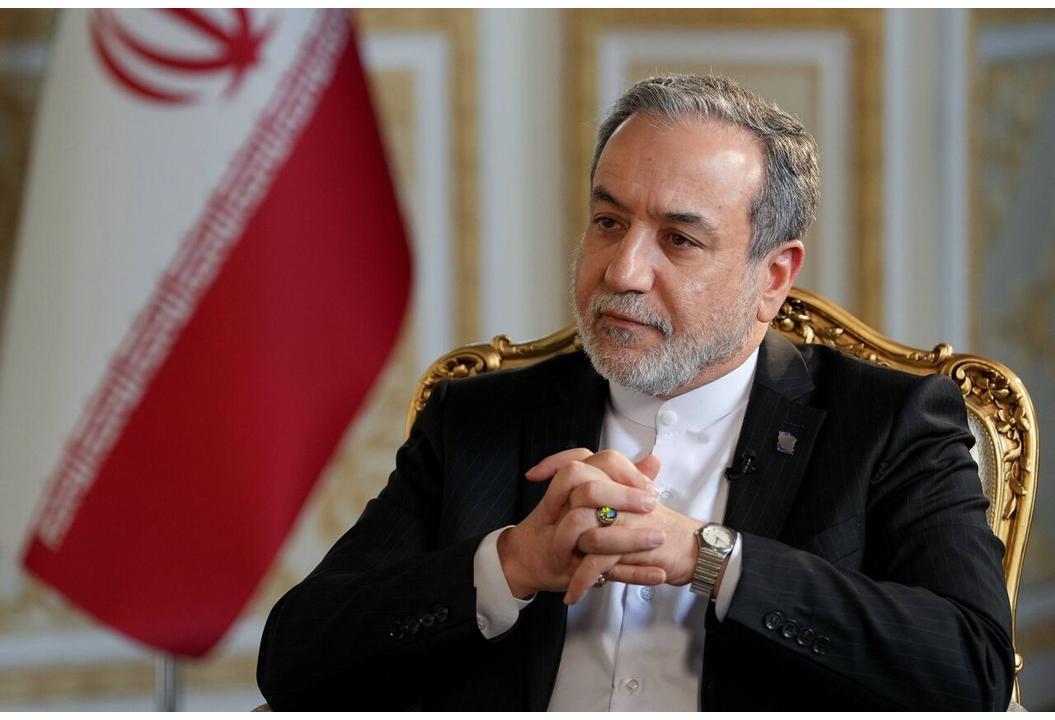
In an exclusive interview with Iran Daily, published on Saturday, Araghchi said Tehran was seeking a “good, honorable and dignified agreement,” stressing that any deal must safeguard Iran’s national interests and prevent a renewed conflict.
The following is the full text of the interview:
“We are seeking an agreement that would ensure there is no more war afterward.” The remark captures Iranian Foreign Minister Abbas Araghchi’s approach to the confrontation between Tehran and Washington, as the line between diplomacy and conflict grows increasingly blurred.
Araghchi made the comment on his flight back to Tehran this week after visits to Pakistan and Oman. In an interview with Iran Daily, he discussed Tehran’s initiative to end the state of “neither war nor peace”, the US use of blockades and pressure, the prospects for an agreement, Iran’s enriched uranium stockpile and debate over its nuclear doctrine.
He described a two-day proposal that followed the compression of an initial seven-day plan. Under it, the United States would fulfill its commitments on the first day, and Iran would reopen the Strait of Hormuz on the second, when negotiations on a final agreement would begin. Washington did not accept the proposal.
Q: What part of Iran’s seven-point proposal was unacceptable to Washington? Was the disagreement over the commitments or their sequence? Was the United States expected to act within 48 hours, with nuclear talks beginning on the third day? If so, why was Washington unwilling to wait even 48 hours for negotiations to begin?
We drew up a seven-day plan combining US commitments under the Islamabad Memorandum of Understanding with new issues, including additional US sanctions and Iran’s demand that they be lifted. The plan, also known as Iran’s seven conditions for reopening the Strait of Hormuz, contained slightly more than seven requirements. The United States was to fulfill its commitments during the first five or six days. We would reopen the Strait on the sixth day, and negotiations on a final agreement would begin on the seventh. We sent the plan indirectly to the Americans through Qatari intermediaries during our visit to New York in September.
For about two months, the intermediaries carried proposals between the two sides. The Americans said they accepted Iran’s demands provided that some of their own requests were added. Those were issues we had agreed to discuss as part of a final agreement. After extensive discussions, one or two US requests were added. As the US elections approached, the intermediaries proposed shortening the timetable to speed up implementation. We agreed, turning the seven-day plan into a two-day proposal.
Q: Under the two-day plan, would the United States act on the first day and Iran on the second, with nuclear negotiations starting afterward?
No. The Americans would fulfill their commitments on the first day. On the second, we would reopen the Strait, and negotiations between Iran and the United States on a final agreement would begin. The talks were to start that day, not conclude then.
Under the Islamabad Memorandum of Understanding, we had allowed 60 days for negotiations, with the possibility of an extension. The two-day plan set no deadline: talks would begin immediately and continue for as long as necessary. It was a practical proposal that incorporated both sides’ demands and opened the way for negotiations.
We presented it about 10 days before the US elections. Had Washington accepted it, subsequent events might have unfolded differently.
The two-day plan is no longer on the table. But if the Americans are serious about an agreement, it can still provide a basis for one. Our position is clear: the seven conditions must be met before the Strait reopens. We are ready to discuss US proposals on how to implement them, including at the expert level. But the United States must first correct its position and take the necessary confidence-building measures.
Q: Is dilution or another solution still possible for Iran’s 400 kilograms of uranium enriched to 60%, even if the stockpile remains in the country?
I believe a formula can be found, but we have clear red lines. The material will not be taken out of the country, and the stockpile will be used according to our needs; however, those needs are defined. A fair solution that serves our national interests and meets the country’s needs is possible. But this issue cannot be decided in isolation from the others.
Q: Calls to review Iran’s nuclear doctrine and change its approach have become more prominent, particularly among members of the intellectual and policy community. What is your view?
Those calling for a change have serious and thought-provoking arguments. Those who favor maintaining the current doctrine also have strong arguments. This is a major strategic debate, and there is nothing wrong with examining it seriously because it directly concerns national interests and security.
Supporters of change argue that the current doctrine has failed to protect Iran’s nuclear facilities. They point to the country’s membership in the Nuclear Non-Proliferation Treaty (NPT), the placement of its nuclear facilities under safeguards and International Atomic Energy Agency (IAEA) supervision, and its adherence to existing monitoring arrangements. None of these prevented attacks and the bombing of the facilities. They argue that if these mechanisms cannot guarantee their security, other ways of protecting the nuclear program must be considered.
But another reality must also be considered. Our Leader, the strongest opponent of nuclear weapons, who had issued a fatwa against them, was himself targeted and martyred. This event has profound significance and must be taken into account in any assessment of the country’s nuclear doctrine. Changing the doctrine would have far-reaching consequences. Even Russia and China oppose such a move. For now, our doctrine has not changed, and our official position remains the same.
Q: With the state of “neither war nor peace” continuing and US forces building up in the region, is Iran’s priority still to manage tensions and prevent conflict, or could other options emerge if pressure increases?
This situation is undesirable, and there is agreement at the highest levels that it must end. There are only two ways out: war or peace. War is not desirable, and no one supports it. Our solution is a negotiated settlement. But we are not seeking just any agreement. We want one that is good, honorable, and dignified, and that preserves our dignity. No one wants an agreement that undermines it.
A war may end in one side’s outright victory. Negotiations, however, involve give-and-take: both sides make concessions and gain something in return. The challenge is to manage that process in a way that protects the country’s interests and dignity.
To end this state of “neither war nor peace”, we must be confident that war will not break out again and that we will not return to the same situation. We must wait for the necessary conditions to achieve a successful outcome. What is the point of reaching an agreement today if it is violated two months later and war resumes?
Q: Qatar has launched extensive diplomatic efforts to reduce tensions and mediate. Could countries such as the UAE, by contrast, see the continuation of the current situation as serving their interests?
All countries in the region oppose war. Their experience during the 40-day war showed them its consequences. [US President Donald] Trump has claimed that some regional countries, including those he named, asked him to stop the war but continue pressure and sanctions against Iran. I believe this is a narrative the United States is trying to promote. Regional countries do not want war, but do they also want a blockade, economic pressure, and further sanctions against Iran? If so, that would be a strategic mistake. They want lasting peace, not recurring war.
We have repeatedly told them that one part of the region cannot be at peace while another is at war. One side cannot pursue development and prosperity while the other faces sanctions, pressure, and insecurity. Lasting peace must be comprehensive and inclusive, involving all countries in the region. Economic progress and prosperity must extend to all of them. Only then can peace endure. I believe many countries, including the UAE, share this view.
The region has also learned important lessons from the war. Perhaps the most important is that countries cannot rely on outside forces to guarantee their security. US military bases, or those of any other country, cannot necessarily protect their host nations and may instead become sources of insecurity. If these bases were not in the region, they would not have been attacked. More importantly, they failed both to protect their host countries and to defend themselves. One key lesson, therefore, is that security must be homegrown.
4194**9417